
Test PU Paint Adhesion Before Production Runs
Test PU Paint Adhesion Before Production Runs
Definition of PU Paint and Where Adhesion Fails
PU paint is a polyurethane coating that forms its film when a polyol resin reacts with an isocyanate hardener. The reaction builds a cross linked network that is tough, flexible, and resistant to abrasion. Before release, quality teams need to answer a narrower question than most datasheets address: will this film stay bonded to this specific substrate after curing, flexing, washing, and months in service? Chemistry gives the film its strength, but adhesion is decided at the interface between coating and surface. Surface energy, oil, release agent residue, moisture, and cure conditions all shape that interface. A coating that passes on a clean steel test panel can still peel from a molded PU part carrying traces of mold release. Adhesion testing therefore works best as a gate before production, not as a complaint investigation afterwards.
Adhesion, defined: the force that holds a cured coating film to the surface beneath it. Failure shows up as peeling, flaking, or lifting at cut edges. It is a property of the coating and substrate pair together, never of the coating alone.
Types of PU Paint
Polyurethane coatings are grouped mainly by how they cure and what carries the resin. The choice changes the adhesion risk, because each type reacts differently to substrate moisture, surface contamination, and cure temperature. The table below compares the four types we see most often in industrial qualification work. For two component systems, the choice of curing agent also affects hardness, flexibility, and bonding behavior.
| Type | Typical substrates | Strength | Limit |
|---|---|---|---|
| Two component solvent borne | Metal, wood, composites | High chemical and abrasion resistance | Limited pot life; mix ratio errors cause soft or brittle film |
| Two component waterborne | Wood based panels, indoor parts | Lower odor and solvent load | Sensitive to humidity and substrate moisture |
| One component moisture cure | Touch up, small batches | No mixing step | Slower cure; bubbling risk in high humidity |
| Flexible elastomeric grades | PU soles, soft molded parts | Film follows substrate movement | Lower hardness; needs a flex check in addition to adhesion |
Features of PU Paint That Affect Bonding
Polyurethane films are valued for abrasion resistance, adjustable flexibility, chemical resistance, and a wide gloss range. Color is normally added through a pigment dispersion, and a compatible pu paste & pigment system keeps shade consistent from batch to batch. Each feature has a bonding consequence. A harder, more heavily cross linked film resists scratching but moves less with the substrate, so it can crack away from flexible parts. A softer film follows movement but may need a longer cure before it handles well. Aromatic isocyanate grades can yellow outdoors, so exterior work generally calls for aliphatic grades. None of these features guarantees adhesion. They only widen the window in which good surface preparation will deliver it.
- Flexibility range: tuned by resin and hardener choice; match it to how much the part bends.
- Chemical resistance: depends on full cure, which is why early testing gives false results.
- Color and gloss: set by color paste and additives; heavy pigment loading can change film behavior, so retest after any shade change.
PU Paint Application Areas by Substrate
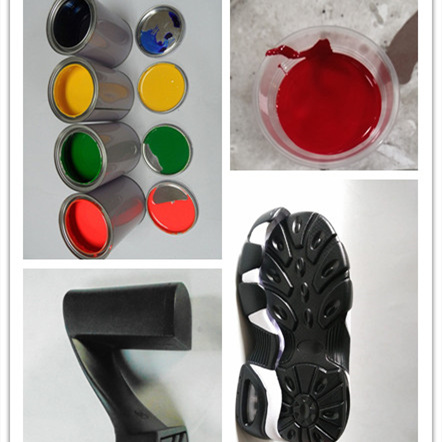
Each substrate brings its own contamination and surface problems. Sholee Chemicals works across PU soles, PU car carpets, wood based panels, metal die casting, and paint and glue curing agent products, and the adhesion risk differs for each. On molded PU parts and die castings, the usual culprit is a release agent film left on the surface. On wood based panels, moisture content and dust matter more. Treat the list below as a starting point for what to inspect first, not a complete diagnosis.
- PU soles: mold release residue and plasticizer migration; flex fatigue is the typical long term failure.
- PU car carpets: fiber backing texture and residual processing oils; check coverage as well as bonding.
- Wood based panels: surface moisture, sanding dust, and resin bleed; the coating limits are different for waterborne and solvent borne systems.
- Metal die casting: die lubricant and oxide layers; porosity can trap solvent and cause blisters later.

PU Paint Price and What Moves It
Price per kilogram is rarely the full cost. A cheaper system that fails adhesion testing costs more through rework, scrap, and delayed shipments than a better matched system would have. Price moves with resin and hardener chemistry, solvent or water base, pigment loading, additive packages, and packaging size. Customization also affects cost, since a tailored formulation needs development and test batches. For buyers who need to validate before committing, the useful point is that Sholee Chemicals has no MOQ, so a trial quantity can be ordered for adhesion testing without a volume commitment. Lead time is 30 days. Confirm both at the quotation stage, together with the exact product grade.
| Factor | Effect on price | Buyer action |
|---|---|---|
| Resin and hardener type | Flexible or aliphatic grades usually cost more | Choose by service need, not by default |
| Solvent or waterborne base | Differs by raw material and handling | Compare cost per coated area, not per kilogram |
| Pigment and additive load | Special colors and effects raise cost | Request a color paste matched to your shade |
| Customization | Development effort adds cost | Share substrate and spec data upfront |
| Order and packaging size | Larger packs usually lower unit cost | Start small for trials, scale after approval |
Substrate Prep and Cross Hatch Test Workflow That Flags Adhesion Risk
This workflow catches adhesion problems on test panels, where a failure costs one afternoon, rather than on a production line, where it costs a shift. Run it every time the substrate, supplier lot, release agent, or paint batch changes. Use production parts or panels cut from them, not clean lab coupons. Test panels should also match the film thickness you plan to apply.
| Step | Action | Checkpoint | Common failure reason |
|---|---|---|---|
| 1. Record substrate history | Note material, lot, release agent or die lubricant, and any primer | Written record exists for every panel | Assuming the new lot matches the last one |
| 2. Clean and degrease | Wipe with a suitable solvent or wash, using fresh cloth for each pass | Water spreads in a sheet without beading | Dirty rags that spread release agent instead of lifting it |
| 3. Treat the surface | Light abrasion, primer, or other treatment as the coating supplier advises | Even, dull surface with no polished spots | Over sanding or skipping treatment on low energy plastics |
| 4. Mix and apply | Weigh to the stated ratio; respect induction time and pot life | Film thickness measured, not estimated | Wrong ratio or a thicker lab film than production |
| 5. Cure as in production | Use the same temperature and humidity; wait for full cure | Cure time matches the technical data sheet | Testing when the film is only touch dry |
| 6. Cross hatch test | Cut a grid through to the substrate, press tape on, pull it off, and rate | Cuts clean, tape applied and removed consistently | Dull blade, uneven tape pressure, or cuts that stop in the film |
| 7. Record and decide | Photograph the grid and log the rating against the acceptance level | Pass or fail agreed before testing | Setting the pass level after seeing the result |
For the cross hatch test itself, ASTM D3359 Method B and ISO 2409 are the usual references. ASTM calls for 1 mm cut spacing on films up to about 50 µm and 2 mm for films between 50 and 125 µm. Agree the acceptance level with your customer or internal spec. Many specifications ask for 4B or better on the ASTM scale, but that is a project decision, not a universal rule.
| What you see | Likely cause | Next action |
|---|---|---|
| Coating lifts cleanly off the substrate | Contamination or poor surface energy | Improve cleaning or treatment, then retest |
| Lifts between primer and topcoat | Recoat window missed or incompatible layers | Check overcoat timing and system compatibility |
| Flaking only at grid corners | Brittle film or incomplete cure | Review hardener ratio and cure schedule |
| Good rating but failure later in use | Test does not cover flex, water, or heat exposure | Add the relevant service test |
Know the limits. A cross hatch test does not measure flex fatigue, long term water resistance, or adhesion on films much thicker than 125 µm. For PU soles, add a flex test. For thick films, a pull off method suits better. Treat the grid result as an early warning, not a final guarantee.
User Guide for Production Release
Once panels pass, carry the same conditions into production. Most adhesion problems after a passed test come from process drift: a new batch of release agent, a hardener ratio set by eye, or a cure oven running cooler than the trial. Lock the tested recipe and surface routine into a written work instruction, and assign someone to check it. Where a test shows marginal adhesion, a different curing agent or an adjusted additive package can often fix it, and Sholee Chemicals accepts customized chemical additive and painting products for that purpose.
Buyer and quality checklist
- Test panels made from production substrate, not clean coupons.
- Film thickness on test panels matches planned production thickness.
- Full cure reached before the cross hatch test.
- Acceptance rating agreed in writing before testing.
- Retest triggered by any change in substrate lot, release agent, or paint batch.
Common mistakes
- Testing on a clean lab coupon instead of the real part, which hides contamination problems.
- Skipping the water break check after degreasing.
- Mixing by volume with a loose cup instead of weighing the components.
- Reading results from a film that has not fully cured.
- Assuming one passed test covers every future batch.
FAQ of PU Paint
Can I run a cross hatch test without a lab?
Yes. You need a multi blade cutter with the correct spacing, standard pressure sensitive tape, and a flat cured panel. Keep the same tape type and pressure for every test, or ratings will not be comparable between batches.
How long should the film cure before testing?
Follow the full cure time on the technical data sheet, not the touch dry time. Testing early gives a falsely poor result on some systems and a falsely good one on others.
Does mold release residue always cause failure?
No, but it is the most common cause on molded PU parts and die castings. Some residues clean off easily, while others need a specific wash or a compatible release agent. Only a panel test on your actual part confirms which applies.
What rating counts as a pass?
That depends on your specification. A 4B or 5B result on the ASTM scale is common, but the threshold should come from your customer requirement or internal standard.
PU Paint Supplier
Sholee Chemicals supplies release agents, chemical additives, color paste, and paint curing agents for polyurethane and related coating systems. Our products serve PU soles, PU car carpets, wood based panels, metal die casting, and paint and glue curing agent applications. We accept customized industrial release agent and painting and chemical additive products, which helps when a test shows a surface compatibility gap that standard grades do not close. There is no MOQ, so trial quantities for adhesion testing are available, and lead time is 30 days. Our aim is to create value for customers and contribute to society. If you are looking for a PU paint supplier, contact us with your substrate, process, and target adhesion rating, and we will send the latest quote and sample options.