
Alloying Agents: When Adding More Weakens Metal Properties
Understanding When an Alloying Agent Diminishes Metal Performance
An alloying agent is a chemical element or compound intentionally added to a base metal to enhance specific properties like strength, hardness, or corrosion resistance. This process, known as alloying, is fundamental to modern materials science. However, a common misconception among engineers and procurement managers is that "more is always better." Increasing the percentage of an alloying agent does not guarantee a linear improvement in performance. In fact, exceeding a certain threshold can severely degrade the material's structural integrity, making it brittle, difficult to process, and unnecessarily expensive.
This article explains the critical tipping point where adding more of an alloying element weakens the final product. We will explore the mechanisms behind this phenomenon, identify the specific trade-offs involved, and provide a framework for making informed material selection decisions. Understanding these boundaries is essential for optimizing both performance and production costs.
How Alloying Agents Fundamentally Alter Metals
To understand why too much of an additive can be detrimental, it is important to first understand how they work on a microscopic level. When an alloying agent is introduced into a molten base metal, its atoms distribute themselves within the metal's crystalline structure. This modification primarily enhances properties through two mechanisms:
- Solid Solution Strengthening: The atoms of the alloying element, which are different in size from the base metal atoms, create lattice distortions. These imperfections disrupt the uniform atomic planes, making it more difficult for dislocations (defects) to move through the crystal structure. Since plastic deformation in metals occurs through dislocation movement, restricting this movement makes the material stronger and harder.
- Precipitation Hardening: In some alloys, heat treatment causes the atoms of the alloying element to cluster together and form tiny, hard particles called precipitates. These particles act as physical obstacles, pinning dislocations in place and significantly increasing the material's strength and hardness. This is a common method used in aluminum, nickel, and certain steel alloys.
Both mechanisms rely on a controlled, well-dispersed integration of the new elements. Problems arise when the concentration of the alloying agent becomes too high for the base metal's structure to accommodate, leading to the formation of undesirable phases that compromise performance.
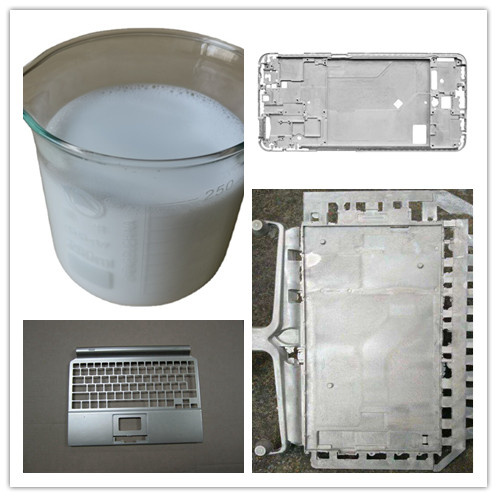
Common Alloying Elements and Their Intended Effects
Different elements are added to achieve specific outcomes. While these are their primary functions, their effects are highly dependent on concentration and the presence of other elements. The world of material additives is complex, extending beyond metals into polymers, where products like pu paste & pigment are used to modify color and physical properties.
Here is a brief overview of common alloying elements used in steel and their principal roles when used in appropriate quantities:
- Carbon (C): The most fundamental alloying element in steel. Increases hardness and tensile strength, but reduces ductility and weldability.
- Chromium (Cr): The primary agent for creating stainless steel. Greatly enhances corrosion and oxidation resistance. It also improves hardenability and wear resistance.
- Nickel (Ni): Increases toughness, impact strength, and ductility, especially at low temperatures. It also improves corrosion resistance in certain environments.
- Manganese (Mn): Improves hardness, strength, and wear resistance. It also plays a key role in deoxidizing molten steel during production.
- Molybdenum (Mo): Enhances strength, hardness, and creep resistance at high temperatures. It also improves resistance to pitting corrosion in stainless steels.
- Silicon (Si): Primarily used as a deoxidizing agent. It also increases strength and hardness but can significantly reduce ductility at higher concentrations.
- Vanadium (V): Promotes a fine grain structure, which increases toughness. It also forms hard carbides that improve wear resistance.
The Tipping Point: When Higher Alloy Content Becomes Detrimental
Every alloying system has a point of diminishing returns, after which negative consequences begin to outweigh the benefits. Adding more of an alloying agent beyond this optimal concentration can introduce severe manufacturing and performance issues. The key is to specify a material that meets, but does not excessively exceed, the application's requirements.
The following table outlines the specific failure modes associated with excessive alloy content, providing a clear boundary explanation for technical buyers and engineers.
| Negative Outcome | Common Agents Involved | Technical Explanation | Business Implication |
|---|---|---|---|
| Increased Brittleness | Carbon, Silicon, Manganese | Exceeding solubility limits forms brittle intermetallic compounds or large, continuous networks of carbides (e.g., cementite in steel). These phases act as internal stress concentrators and easy pathways for cracks to propagate. | Higher material cost for a part that is prone to catastrophic failure under impact or load. High scrap rates during production and in the field. |
| Reduced Ductility & Formability | Chromium, Molybdenum, Vanadium | High concentrations create complex, hard phases (like sigma phase in stainless steels) that severely resist plastic deformation. The material can no longer be easily bent, stamped, or drawn without cracking. | Increased processing costs due to the need for more powerful machinery, slower operational speeds, and higher tool wear. In some cases, desired shapes become impossible to form. |
| Welding Difficulties | Carbon, Boron, Sulfur, Phosphorus | A high carbon equivalent (CE) increases hardenability, leading to the formation of brittle martensite in the heat-affected zone (HAZ) upon cooling. This can cause hydrogen-induced or cold cracking. | Requires expensive and time-consuming pre-heating, post-weld heat treatment (PWHT), or the use of specialized low-hydrogen welding consumables to prevent weld failure. |
| Unnecessary Cost | Nickel, Molybdenum, Cobalt, Tungsten | Adding expensive elements for properties not required by the application (e.g., high-temperature strength for a room-temperature part) inflates material cost with no tangible performance benefit. This is known as over-specification. | Direct and significant increase in the bill of materials (BOM) cost, reducing product profitability and market competitiveness. |
A Practical Checklist for Specifying Industrial Chemical Additives
Selecting the right material composition requires a balanced approach that considers performance, processability, and price. Whether you are working with metals or polymers, the principles remain the same. As a release agent and chemical additive supplier, we guide our customers through a systematic evaluation to ensure the chosen formulation is fit for purpose. We support this process with flexible supply terms, such as no minimum order quantities (no MOQ), which allows for cost-effective testing and prototyping without a large upfront commitment.
Use this buyer's checklist to guide your material selection process:
- Define the Primary Performance Goal: What one property is non-negotiable for the application's success (e.g., corrosion resistance, tensile strength, wear resistance)? Start here.
- Identify the Full Operating Environment: What are the ranges for temperature, pressure, and chemical exposure? Will the part experience cyclic loading, vibration, or impact?
- Consider All Secondary Processing Steps: Will the component be welded, machined, formed, or heat-treated? Ensure the material's properties are compatible with these downstream processes.
- Establish a Realistic Cost Target: What is the maximum allowable material cost per unit to maintain profitability? This will help narrow down the viable options.
- Review Existing Industry Standards: Does an existing ASTM, ISO, or DIN standard already meet your needs? Leveraging established standards can save significant time and resources compared to developing a custom formulation.
- Consult with a Material Supplier: Discuss your application in detail with a technical expert. A good supplier can recommend an optimal grade or suggest alternative materials you may not have considered. Our 30-day payment terms provide our partners with operational flexibility.

Frequently Asked Questions about Alloying Agents
Here are answers to common questions that arise when specifying alloyed materials and additives.
What is the difference between an alloying agent and a general additive?
The term alloying agent is typically used in metallurgy to describe elements added to metals to form a new material (an alloy) with fundamentally different bulk properties. "Additive" is a broader term used across many industries, including polymers, paints, and lubricants. For example, a curing agent is an additive that initiates a chemical reaction to harden a material, while a pigment is an additive that imparts color.
Can you reverse the negative effects of too much alloy?
In most cases, it is not practical or economical. Once an undesirable phase (like brittle intermetallics) has formed throughout the bulk material, it is often irreversible. While specific heat treatments can sometimes dissolve or modify these phases to a limited extent, the most effective solution is to use the correct composition from the start. Remelting and recasting the entire batch is the only true "reversal," which is extremely costly.
How does temperature affect an alloying agent's performance?
Temperature has a profound effect. Some elements, like molybdenum and tungsten, are added specifically to improve strength at high temperatures (creep resistance). Conversely, high temperatures can cause some precipitates in age-hardened alloys to coarsen or dissolve, leading to a loss of strength. At cryogenic temperatures, the wrong alloy choice (like many carbon steels) can lead to brittle fracture, while nickel-containing alloys often retain their toughness.
Are there alternatives to using a highly alloyed material?
Yes. Instead of relying on a costly, highly alloyed bulk material, consider surface modification techniques. These methods apply a high-performance layer to a more economical substrate. Examples include:
- Hardfacing: Welding a layer of wear-resistant material onto a component's surface.
- Plating: Applying a thin layer of a corrosion-resistant metal like chromium or nickel.
- Coatings: Using specialized paints and polymers, such as durable shoe sole paint or industrial epoxies, to protect against chemical attack or abrasion.
The key to effective material specification is balancing performance with cost and manufacturability. By understanding the limits of any alloying agent or chemical additive, you can design and produce more reliable and cost-effective products.
For your industrial chemical additive needs, from performance-enhancing compounds to specialized formulations, our team is ready to assist. Contact Sholee Chemicals for a technical consultation or to request a quote on your next project.