
Water vs Oil Die Casting Release Agent Comparison Guide
How Water and Oil Based Die Casting Release Agents Compare on Heat and Residue Control
A die casting release agent is the thin film applied to a mold cavity before molten metal is injected, and the choice between a water carrier and an oil carrier changes almost everything downstream — cycle time, part cleanliness, and even how often the mold needs stripping. Engineers moving from one plant to another, or switching suppliers mid-contract, often ask the same question: why does a release agent that worked fine on one die suddenly leave residue or scorch marks on another? The answer usually sits in the formula base, not the brand name on the drum.
What a Die Casting Release Agent Actually Does
By definition, a die casting release agent is a lubricating and separating compound sprayed onto the die surface prior to each shot. It does three jobs at once: it forms a barrier so molten aluminum, zinc, or magnesium doesn't weld to the tool steel, it pulls heat away from the cavity surface to stabilize cycle temperature, and it reduces drag during ejection so the casting pulls free without galling. Get any one of those three functions wrong and you get soldering, surface pitting, or dimensional drift over a production run.
Types of Die Casting Release Agent
Most release agents fall into two chemistry families, with a few hybrid blends in between.
- Water based release agent — a diluted emulsion, typically mixed 1:50 to 1:150 with water, sprayed as a fine mist that flashes off on contact with the hot die.
- Oil based release agent — a concentrated or semi-concentrated oil film, applied neat or lightly diluted, that stays on the surface longer before burning off.
- Semi-synthetic blends — combine water dilution with synthetic oils to balance cooling speed and film durability, often used on deep-cavity dies where straight water formulas evaporate too fast.
Features That Matter on the Shop Floor
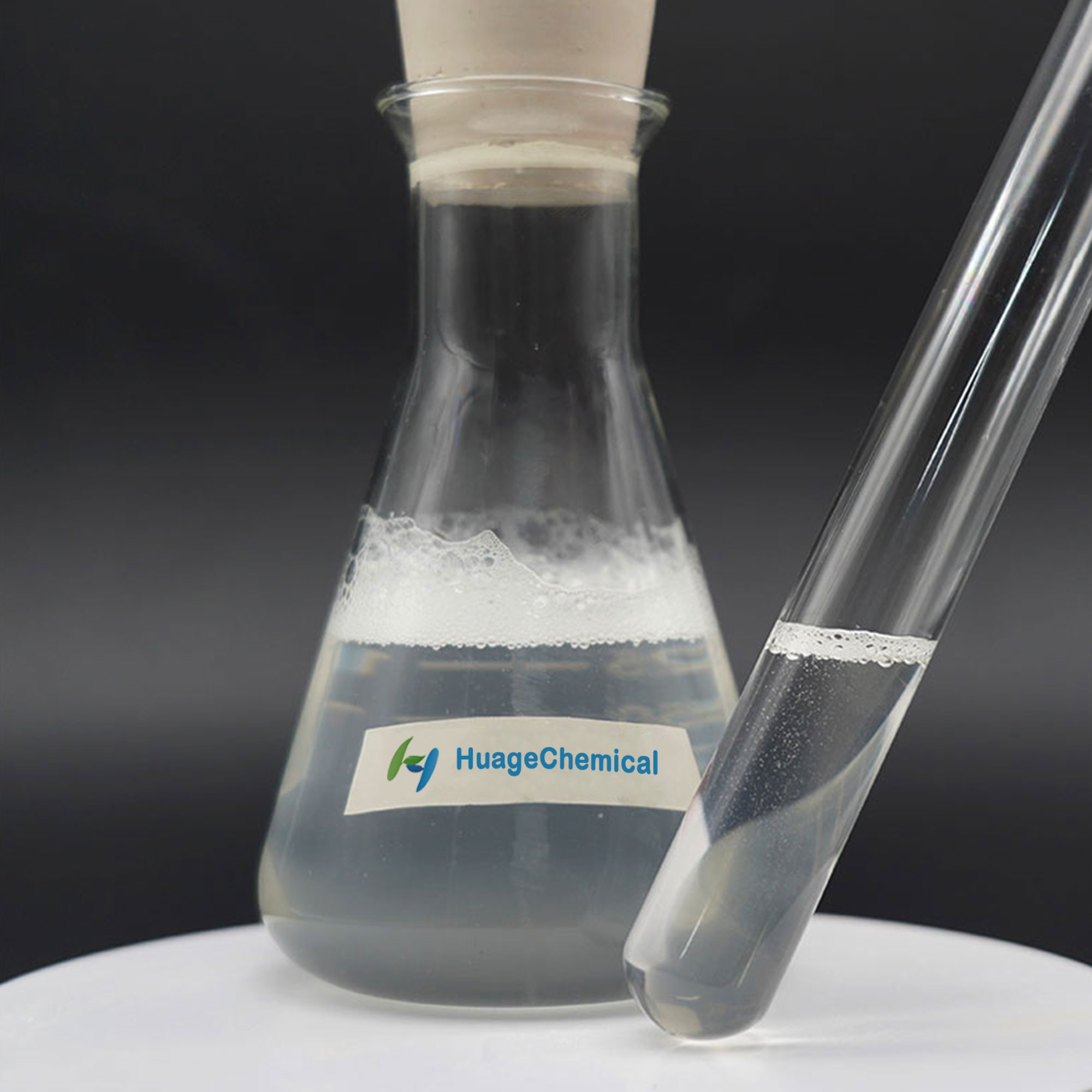
Beyond the water-versus-oil split, a few physical features decide whether a release agent earns a repeat order. Flash point matters for spray booth safety. Viscosity at working temperature determines spray pattern consistency. Residue ash content affects how often the mold needs manual cleaning. And foam tendency in the mixing tank affects how evenly the agent lays down on vertical die faces. A formula that scores well on paper but foams in the tank will still cause uneven coverage and inconsistent release — so lab data should always be checked against an actual spray trial before switching suppliers.
Die Casting Release Agent Application Across Industries
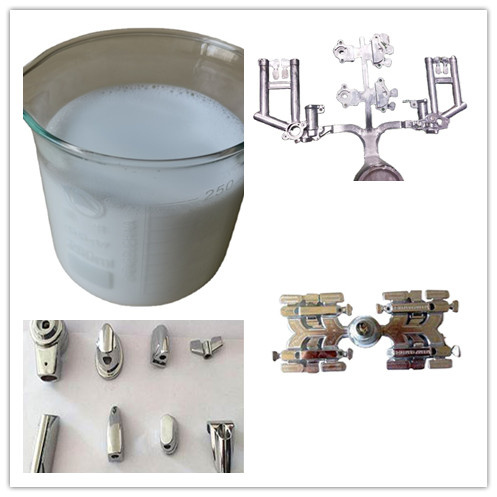
While the core chemistry is built for metal die casting, the same release-separation principle shows up in several adjacent processes. PU sole molding uses a close cousin of the same water-based emulsion to pull finished soles cleanly from aluminum molds. PU car carpet backing and wood-based panel pressing rely on similar release films to prevent sticking during hot press cycles. Food-grade paper processing uses a stripped-down, low-residue version for release during coating. In every case, the underlying question is the same one die casters ask: does the film separate cleanly without leaving a surface that needs re-cleaning before the next cycle.
Water Based vs Oil Based Formula Comparison
This is the comparison technical buyers actually need before a trial order, because picking the wrong base for your die temperature range causes real downtime, not just a theoretical mismatch.
| Parameter | Water Based Formula | Oil Based Formula |
|---|---|---|
| Cooling behavior | Fast, aggressive — water flashes to steam on contact, pulling heat sharply off the die surface | Slow, gradual — oil film insulates rather than cools, keeping die temperature more stable shot-to-shot |
| Residue risk | Low to moderate; residue is mostly mineral salts that rinse off with water | Higher; carbon buildup and varnish form if the die runs hotter than the oil's burn-off point |
| Dilution needs | Heavy dilution required, 1:50 to 1:150 depending on die complexity; needs a mixing tank and agitation | Little to no dilution; applied closer to neat concentration, simpler tank setup |
| Suitable operating conditions | High-speed, high-volume runs where die temperature exceeds 180°C and cycle times are short | Lower-volume runs, intricate cavities, or dies under 150°C where longer film persistence helps release on complex geometry |
If a buyer defaults to oil based release agent on a high-speed line because "it's always worked before," the carbon residue will build up inside a few hundred shots and force an unplanned mold teardown. Conversely, running water based release agent on a low-temperature, intricate die wastes material because the film flashes off before it finishes coating the cavity. Matching base chemistry to actual die temperature profile — not habit — is the real decision point.
Die Casting Release Agent Price Factors
Pricing on release agents swings more than buyers expect, and rarely for arbitrary reasons. Four factors drive most of the variation:
- Dilution ratio — a water based concentrate diluted 1:100 costs far less per shot than an oil based product used near full strength.
- Additive package — rust inhibitors, anti-foam agents, and food-grade certifications all add cost per liter.
- Order volume and customization — custom-blended viscosity or flash point for a specific die temperature range typically carries a small formulation fee on first-run batches.
- Packaging and freight — drum size, IBC totes, and destination freight for export orders shift landed cost more than the base chemical price itself.
Buyers should ask for price per diluted liter, not per drum, since a cheaper concentrate that needs less dilution can still cost more in actual spray use.
Die Casting Release Agent User Guide
A consistent application procedure prevents most of the defects blamed on "bad release agent" when the real issue is spray technique.
- Confirm die surface temperature before the first shot of the day — most water based formulas perform best above 180°C.
- Mix concentrate to the supplier's recommended ratio; under-diluting wastes material, over-diluting causes incomplete coverage.
- Spray in a light, even pass — avoid pooling in deep cavities, which causes steam pockets and surface porosity.
- Allow full flash-off before closing the die; closing too early traps moisture and causes gas porosity in the casting.
- Inspect every 200 to 500 shots for residue buildup and adjust spray volume if carbon or mineral film starts accumulating.
Common mistakes to avoid:
- Switching base chemistry mid-run without re-checking die temperature compatibility.
- Using oil based release agent near its flash point without adjusting ventilation.
- Assuming one dilution ratio works across all cavity depths on the same die.
- Skipping residue checks until ejection force noticeably increases.
Buyer's Decision Checklist
- What is the actual surface temperature of your die during steady-state production?
- Does your cavity geometry need longer film persistence (favoring oil) or fast cycle cooling (favoring water)?
- Can your spray system handle a diluted water emulsion, or is a near-neat oil application simpler for your line?
- Do you need food-grade or low-residue chemistry for any adjacent application, such as paper coating?
- Is your supplier able to customize viscosity or additive packages for a trial batch before a full order?
Sholee Chemicals as a Die Casting Release Agent Supplier
Sholee Chemicals supplies release agent, PU paste and pigment, and curing agent products across PU soles, PU car carpets, wood-based panels, food paper, and metal die casting applications. We accept customized formulations for industrial release agents and painting additives, with no minimum order quantity and typical lead times around 30 days. For footwear manufacturers running parallel production lines, our shoe sole paint line shares the same water-based separation chemistry discussed above, so buyers evaluating one application can often test both with a single sample request.
FAQ of Die Casting Release Agent
Which base lasts longer on the die surface, water or oil?
Oil based release agent persists longer because it doesn't flash off the way water does. That's an advantage for complex cavities but a liability on high-speed lines where carbon residue builds up faster.
Can water based and oil based release agents be mixed?
Not reliably. The two carriers behave differently under heat, and blending them without a formulated semi-synthetic product usually causes uneven film coverage and separation issues in the mixing tank.
How often should release agent be reapplied during a production run?
This depends on die temperature and shot frequency, but most operations reapply every cycle, with a full residue inspection every 200 to 500 shots.
Is a custom viscosity or dilution ratio possible for a trial order?
Yes. Sholee Chemicals accepts customized industrial release agent formulations, and with no MOQ, buyers can trial a small batch before committing to a full production order.
If you're sourcing a die casting release agent and want a formula matched to your actual die temperature and cycle speed, reach out to Sholee Chemicals for a sample or the latest quote.