
Choosing the Right Die Casting Lubricant for Your Process
Choosing the Right Die Casting Lubricant for Your Process
A die casting lubricant is a specialized chemical formulation applied to the surface of a die mold before each casting cycle. Its primary function is to prevent the molten metal from adhering to the die, facilitating easy release of the solidified part. Selecting the appropriate formulation is a critical decision that directly impacts cycle times, die life, part quality, and operational costs. The choice between water-based, synthetic, or other types involves balancing thermal management, environmental considerations, and the specific demands of the alloy and part geometry.
This guide provides a technical breakdown of different lubricant types, application methods, and key selection criteria to help engineers and procurement managers make informed decisions for their high-pressure die casting operations.
What Is a Die Casting Lubricant?
At its core, a die casting lubricant, often called a die casting release agent, is a thermal and chemical barrier. It is applied to the cavity of a steel die to perform several essential functions in the high-pressure die casting process. First, it forms a durable film that prevents the molten metal alloy—such as aluminum, zinc, or magnesium—from soldering to the die steel. This ensures a clean and easy ejection of the finished casting. Second, the lubricant helps control the surface temperature of the die, drawing heat away from critical areas to prevent thermal shock and extend the operational life of the expensive tooling. Third, it provides lubricity, reducing friction as ejector pins push the casting out of the mold, which minimizes stress on the part and prevents distortion or damage. A well-formulated lubricant also contributes to the final surface finish of the cast part, reducing the need for secondary finishing operations.
Types of Die Casting Lubricants
Die casting lubricants are broadly categorized based on their carrier fluid and chemical composition. The choice depends heavily on the casting alloy, operating temperature, and environmental regulations. Each type offers a distinct profile of performance, cost, and operational requirements.
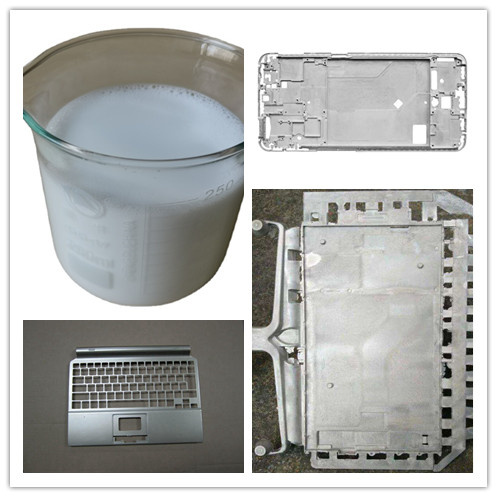
- Water-Based Lubricants: These are the most common type, consisting of an emulsion of oils, waxes, silicones, and other additives in water. The water acts as a carrier and provides significant cooling to the die surface upon application. They are cost-effective and non-flammable. Dilution ratios can be adjusted to fine-tune cooling and release properties, making them versatile for a wide range of applications, especially for aluminum die casting lubricant formulations.
- Water-Free (Synthetic) Lubricants: These formulations use a synthetic oil or polymer base instead of water. They are applied in very small quantities and do not provide the same level of cooling as water-based types. This makes them ideal for applications where maintaining a high, stable die temperature is necessary, such as for casting magnesium or thin-walled parts. They produce less steam and can lead to cleaner dies and workplaces.
- Die Lubricant Concentrate: Many lubricants are supplied as concentrates that are diluted with water on-site. This reduces shipping costs and storage space. The quality of the dilution water (hardness, pH) is a critical process parameter that must be controlled to ensure consistent performance of the emulsion.
- Powder Lubricants: Applied electrostatically, powder lubricants are completely water-free and oil-free. They form a very thin, uniform release film and are used in specialized applications where minimal residue and no die cooling from the lubricant is desired.
Comparing Lubricant Application Systems
The method of applying the lubricant is as important as the lubricant itself. The choice of system—traditional spraying, micro-spray, or electrostatic—depends on the lubricant type and the desired process control. Selecting the right combination is key to optimizing material usage, cycle time, and part quality. The table below compares the requirements and best-use cases for common application methods.
| Parameter | Conventional Water-Based Spray | Waterless (Oil-Based) Spray | Micro-Spray (Minimal Quantity) | Electrostatic Powder |
|---|---|---|---|---|
| Lubricant Type | Water-based emulsions | Synthetic or oil-based liquids | Specialized water-based or synthetic fluids | Dry powder lubricant |
| Primary Function | Lubrication and significant die cooling | Lubrication with minimal cooling | Precise lubrication with controlled, minimal cooling | Lubrication with zero cooling |
| Best For | Large, complex aluminum or zinc castings requiring substantial heat removal. | Magnesium casting, structural parts, or processes needing stable, high die temperatures. | Automated cells, thin-walled parts, and reducing wastewater and consumption. | Specialized applications requiring an extremely clean process and no thermal management from the lubricant. |
| Consumption Rate | High | Low | Very Low | Extremely Low |
| Wastewater Generation | High (requires treatment) | None | Minimal | None |
| Cycle Time Impact | Can be longer due to time needed for water evaporation. | Potentially faster cycles as there is no water to evaporate. | Can enable very fast cycles due to precise application and minimal evaporation time. | Fast, but system complexity can be higher. |
Decision Rules: When to Choose Each System
- Choose Conventional Water-Based Spray when: Your primary need is aggressive die cooling for large parts, and cost per gallon is a major consideration. This system is robust but less efficient in terms of material use and waste generation.
- Choose Waterless (Oil-Based) Spray when: You are casting temperature-sensitive alloys like magnesium or need to maintain a high die temperature to ensure metal flow into thin sections. This avoids thermal shock and porosity issues related to water.
- Choose Micro-Spray when: Process automation, consistency, and minimizing lubricant consumption and waste are your top priorities. It offers the best balance for modern, high-efficiency casting cells.
- Choose Electrostatic Powder when: You have a highly specialized application where any liquid residue is unacceptable and you need the thinnest possible release film.
Factors Influencing Die Casting Lubricant Price
The price of a die casting release agent is not a simple per-gallon figure. It is influenced by a combination of raw material costs, formulation complexity, and performance characteristics. Understanding these factors helps in evaluating the total cost of ownership, not just the initial purchase price.
- Base Material: The core component—be it conventional wax, silicone, synthetic polymer, or plant-based ester—is a primary cost driver. High-performance synthetic bases designed for a high temperature die lubricant generally cost more than standard paraffinic waxes.
- Additive Package: The formulation includes a blend of additives such as emulsifiers, biocides (for water-based types), corrosion inhibitors, and extreme pressure (EP) agents. A more complex and effective additive package increases the cost but also enhances performance and die life. We can work with you to provide a customized industrial release agent tailored to your specific needs.
- Concentration Level: Lubricants sold as a die lubricant concentrate may have a higher upfront cost but can be more economical after dilution. The final cost-per-use depends on the required dilution ratio for your process. A higher-quality concentrate may allow for leaner dilution ratios, lowering the effective cost.
- Volume and Packaging: Like most industrial chemicals, purchasing in larger volumes (totes vs. drums) typically results in a lower per-unit price.
- Regulatory Compliance: Formulations that meet stringent environmental and safety standards (e.g., free of certain volatile organic compounds or heavy metals) may require more expensive, refined raw materials, affecting the final price.
Your Reliable Die Casting Lubricant Supplier
At Sholee Chemicals, we specialize in developing and supplying high-performance industrial chemical solutions, including a wide range of release agents, chemical additives, and color pastes. We understand that every casting operation has unique challenges. That's why we support our clients with flexible terms, including no Minimum Order Quantity (MOQ), allowing you to trial and procure materials based on your actual production needs without being burdened by large inventory requirements. Our standard lead time is approximately 30 days, ensuring a reliable supply chain for your operations.
Our product portfolio extends beyond die casting to include solutions for PU soles, automotive components, and wood-based panels. Whether you need a standard release agent or a specialized curing agent for paints and glues, our technical team is ready to assist. We are committed to creating value for our customers by providing consistent, high-quality products that optimize manufacturing processes.
Frequently Asked Questions
Here are answers to some common questions engineers and buyers have when selecting and using die casting lubricants.
- How do I determine the correct dilution ratio for a water-based lubricant?
- The ideal dilution ratio is a balance between release performance, die cooling, and cost. Start with the manufacturer's recommended range (e.g., 1:80 to 1:120). For parts with deep draws or complex geometry, a richer ratio (e.g., 1:80) may be needed for better release. For simpler parts or when more cooling is required, a leaner ratio (e.g., 1:120) can be used. Always perform trials and inspect the castings and die condition to find the optimal setting for your specific process.
- What are the signs of using too much or too little lubricant?
- Too much lubricant can lead to several problems: increased porosity in the casting (from gas generated by burning lubricant), buildup on the die cavity and vents, and staining on the finished part. It also wastes material and increases cycle time as more time is needed for the carrier to evaporate. Too little lubricant will result in difficult part ejection, soldering (metal sticking to the die), and accelerated die wear or damage.
- Can I use the same lubricant for both aluminum and zinc casting?
- While some general-purpose lubricants exist, it is generally better to use a formulation optimized for the specific alloy. Aluminum is cast at much higher temperatures than zinc and requires a lubricant with better thermal stability and release properties at those temperatures. Using a zinc lubricant for aluminum casting would likely result in rapid breakdown and soldering.
- How does water quality affect my water-based lubricant?
- Water quality is critical. Hard water (high in calcium and magnesium ions) can react with the emulsifiers in the lubricant concentrate, causing the emulsion to become unstable, separate, or form soap scum. This leads to clogged spray nozzles, uneven application, and poor performance. Using deionized or softened water is highly recommended for consistent and reliable results.
If you are looking for a supplier of high-performance die casting lubricants or other industrial chemical additives, contact the Sholee Chemicals team to discuss your requirements and receive a detailed quote.