
How to Choose the Right Paper Release Agent Chemistry
Choosing the Right Paper Release Agent for Each Paper Process
Paper release agent selection is the step most formulators rush through, and it shows up later as a stripping failure at the calender, a hazy coating, or a food-liner that fails a migration test. The real question buyers ask us is simpler than the chemistry sounds: silicone or non-silicone, water-based or solvent-based — which one actually fits a given coating line, liner substrate, or impregnation step? The answer depends on line speed, cure temperature, substrate porosity, and what touches the paper after release. This guide walks through the decision points in order, so you can match a chemistry to your process before you run a trial batch.
What a Paper Release Agent Actually Does
A release agent is a thin functional coating applied to paper, film, or liner so that a second material — adhesive, resin, PU foam, or another sheet — can be separated cleanly without tearing fibers or leaving residue. In technical terms, it lowers surface energy at the interface just enough to break adhesive bonding force while still allowing the base sheet to run through rollers, dryers, or presses without slipping. The agent itself is not the product; it is a processing aid that determines whether the finished product releases at the right force, at the right temperature, without transferring onto the mated surface. This distinction matters because buyers sometimes specify release performance in isolation, without accounting for the coating weight, dryer temperature, or downstream lamination step that the agent has to survive.
Types of Paper Release Agents
Four broad chemistry families cover most paper release work. Silicone emulsions dominate food-contact liners and light-release labels because they give very low release values at low add-on weight. Solvent-based silicones still show up in specialty coating lines where fast solvent flash-off is needed and water sensitivity of the substrate is a concern. Non-silicone systems — usually wax, fluorocarbon, or polymer blends — are chosen when silicone migration would contaminate a downstream adhesive or paint bond. Water-based non-silicone dispersions sit between the two, offering easier cleanup and lower VOC exposure than solvent systems, at the cost of slower line speed tolerance. None of these is universally "better"; each solves a different interface problem.
Key Features That Separate One System From Another
When comparing samples, four features decide whether a release agent will actually work on your line, not just in a lab test. Release force is the most obvious one — measured in grams per inch, it needs to sit inside the tolerance your laminator or die-cutter expects. Coat weight control affects both cost and consistency; too little and release is uneven, too much and you waste material and risk migration. Cure or dry speed has to match your dryer section length and line speed, otherwise the coating stays tacky and picks up dust. Finally, subsequent-bond compatibility matters more than most buyers expect: some release agents leave a film that interferes with printing ink or a second adhesive layer applied later in the process.
Where Silicone, Non-Silicone, Water-Based, and Solvent Systems Fit
This is the boundary question that decides most sourcing mistakes. Paper coating, liner production, and impregnation each put different stress on the release layer, so the same chemistry that performs on one process can fail on another. The table below sets rough boundaries based on common process conditions — treat it as a starting filter, not a final spec, since coat weight and dryer profile still need line trials.
| System | Best Fit | Avoid When |
|---|---|---|
| Silicone emulsion | Food-contact liners, light-release labels, fast lines above 200 m/min | Downstream paint or adhesive is silicone-sensitive |
| Solvent-based silicone | Specialty coatings needing fast flash-off, low-moisture substrates | Plant has VOC limits or no solvent recovery |
| Non-silicone (wax/fluorocarbon) | Paper going into paint, PU, or adhesive bonding where silicone transfer is a defect | Very low release force is required |
| Water-based non-silicone | Impregnation and coating lines needing easy washdown, moderate speed | High-speed converting above typical water-based cure capacity |
How to Apply This Boundary in Practice
- Identify what touches the release layer next. If it's PU foam, paint, or an adhesive that reacts to silicone contamination, start with non-silicone options.
- Check your dryer length against cure speed. Water-based systems generally need more residence time than solvent-based silicones; a short dryer section will leave tack.
- Confirm substrate porosity. Highly absorbent kraft paper pulls in more coating solids than coated liner, which changes your actual add-on weight even at the same wet pickup.
- Run a release-force test at your actual line speed, not just at rest — dynamic release values shift with peel angle and speed.
- Common failure reason to check first: most stripping complaints trace back to under-cure, not the wrong chemistry family — verify dryer temperature before switching systems.
Paper Release Agent Applications Across Industries
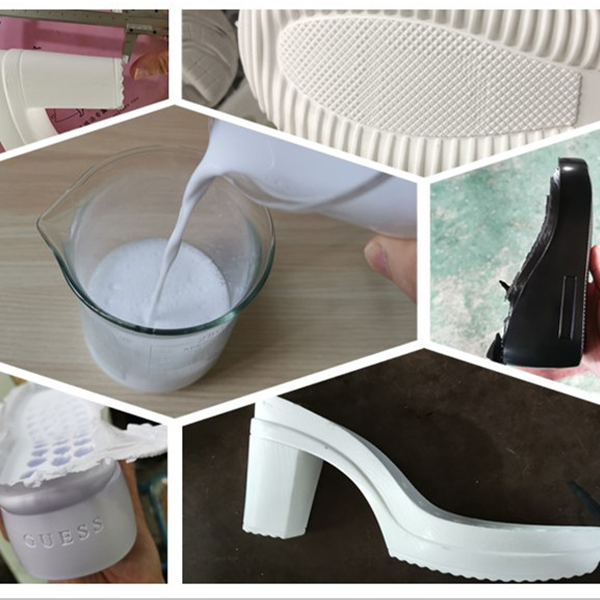
Food-contact paper and liner is the most visible use, where silicone emulsions are chosen for clean release at low migration risk. But the same release-agent logic extends into other bonding processes we supply for: PU sole molding, PU car carpet backing, wood-based panel pressing, and metal die casting release. In PU footwear production, for instance, release performance interacts directly with the PU shoe sole paint finish applied afterward, so the release agent has to leave a surface that still accepts paint adhesion. Similarly, color consistency in the final part often depends on the PU paste and pigment system used alongside the release step, since pigment dispersion quality shows through a poorly released surface. This cross-process view is worth keeping in mind if your plant runs both paper lines and PU molding — the same technical team can usually source both from one supplier.
Paper Release Agent Price Factors
Price per kilogram is the wrong number to compare in isolation; cost per treated square meter is what actually matters. Four factors move that number:
- Solids content — a higher-solids emulsion at a higher price per kg can still be cheaper per treated area if it needs a thinner wet coat.
- Coat weight required — silicone systems typically run at lower add-on weights than wax-based non-silicone options, which affects consumption per roll.
- Order volume and customization — we accept orders with no minimum order quantity, so small-batch trials do not carry a volume penalty the way some suppliers structure pricing.
- Lead time pressure — standard formulations ship faster; custom-tuned release force or additive packages need more formulation time before quoting a final price.
As a rough guide, water-based non-silicone systems tend to sit at the lower end of raw material cost but may need higher coat weights, narrowing the gap with silicone systems once consumption is factored in. Get an actual quote against your target release force and coat weight rather than comparing list prices.
Common Mistakes When Selecting a Release System
- Choosing the lowest release-force sample without checking whether the substrate can handle that force at converting speed — too-low release can cause blocking in the roll.
- Ignoring downstream compatibility, then discovering silicone transfer has ruined an adhesive bond three steps later.
- Scaling up from a lab draw-down test straight to production without a pilot run at real line speed and dryer temperature.
- Assuming a solvent-based system can be swapped for water-based with no change to dryer settings — cure kinetics differ enough to need re-tuning.
- Skipping a coat-weight audit, which hides cost overruns that only show up months later in raw material consumption reports.
Selection Checklist Before You Place an Order
- Confirm what contacts the paper after release (food, adhesive, PU, paint) — this decides silicone versus non-silicone.
- Match cure speed to your existing dryer section length.
- Request a release-force curve at your actual line speed, not a static test.
- Check VOC and solvent-handling limits at your plant before specifying a solvent-based system.
- Ask for a small trial quantity first — no MOQ means you can validate before committing to volume.
Sholee Chemicals as a Paper Release Agent Supplier
We formulate release agents, chemical additives, color paste, and paint curing agents for processors working across paper, PU footwear, PU car carpet, wood-based panels, and metal die casting. Our team accepts customized industrial release agent requests, meaning coat weight, release force, and cure profile can be adjusted to your line rather than forcing your process to fit a standard product. Standard orders are typically fulfilled within 30 days, and there is no minimum order quantity, so trial batches for a new coating line or a new liner substrate are practical without a large upfront commitment. If your plant also runs PU molding, our paint curing agent line and pigment dispersions can be sourced alongside your release agent order, which simplifies vendor management for plants running mixed processes.
FAQ
Does a silicone release agent always give lower release force than non-silicone options?
Generally yes at equal coat weight, but non-silicone fluorocarbon blends can get close for specific liner constructions. The gap narrows as coat weight increases on either system.
Can I switch from solvent-based to water-based without changing my dryer?
Usually not without adjustment. Water-based systems need longer residence time or higher dryer temperature to reach full cure, so a direct swap often leaves residual tack.
Is there a minimum order for a custom release agent formulation?
No — we accept orders without a minimum order quantity, which makes small trial runs practical before scaling up.
How long does a typical order take to ship?
Standard formulations are typically fulfilled within 30 days from confirmed specification.
If you are specifying a paper release agent for a new coating, liner, or impregnation line, send us your target release force, substrate type, and line speed — we can recommend a starting chemistry and quote a trial quantity.