
How a PU Dual Density Shoe Sole Layers Cushioning and Grip
How a PU Dual Density Shoe Sole Layers Cushioning and Grip
Definition of Dual-Density PU Sole Construction
PU dual density shoe sole construction is a molded polyurethane sole built from two layers of different density: a softer, lower-density layer that handles cushioning, and a denser, harder layer that meets the floor. The short answer to the grip question is that layering does not make one material grip better. It lets each layer do a different job. The dense outsole carries the tread, resists abrasion and holds its shape under load. The soft core absorbs impact and lets the forefoot flex, so the tread stays in contact with the ground through the stride. A single-density sole has to compromise between these needs. Too soft and it wears fast and feels unstable. Too hard and it transmits shock and flexes poorly. Dual density removes part of that compromise, but only part. Grip itself still depends on the outsole compound, the tread geometry and the surface being walked on.
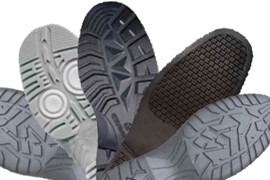
Types of Dual-Density PU Sole Construction
Dual-density soles are grouped by how the two layers are formed and joined. The method affects bond quality, design freedom and tooling cost, so it should be settled before you compare samples from different factories. The three common routes below are general process descriptions. Your sole maker will specify which one it runs.
- Sequential pour in one mold. The dense outsole mix is poured first and partly cures. The softer midsole mix is poured on top. The layers cross-link at the interface, which usually gives a strong chemical bond.
- Preformed outsole insert. A cured dense outsole is placed in the mold and the soft layer is poured over it. This allows different outsole colors or compounds, but the insert surface must be clean and receptive to bonding.
- Separate molding with later assembly. Each layer is made independently and joined with adhesive. It offers flexibility in material choice, but the bond line becomes a point to inspect closely under flex and moisture.
Which type fits depends on volume, design complexity and the failure modes you care about most. The sequential pour tends to suit high-volume safety footwear. Inserts suit designs where outsole color or compound must change between styles.
Layer-by-Layer Comparison of Cushioning, Grip, Abrasion and Stability
The table below links each layer to the function it serves, so you can see where a spec change in one layer shows up in the others. It describes general mechanisms. Actual hardness, density and test values must come from your sole supplier's data sheet.
| Layer | Primary function | Effect on grip | Effect on abrasion | Effect on stability | Trade-off |
|---|---|---|---|---|---|
| Soft-core midsole | Impact absorption, flex, comfort | Indirect. Lets the outsole conform to the floor during heel strike and push-off | None. It should not touch the ground | Lowers stability if too thick or too soft | More cushioning can mean more lateral wobble |
| Dense outsole | Floor contact, wear life, structure | Direct. Compound hardness and tread design set traction | Main wear surface, so density here sets service life | Supports the edges and the platform | Harder compounds last longer but may grip less on smooth wet floors |
| Interface bond | Transfers load between layers | Indirect. Weak bonding lets layers shift under shear | Edge peeling exposes the soft core to wear | Layer slip reduces the support the outsole provides | Needs clean, controlled surfaces during molding |
| Tread pattern | Channels fluid, bites into the surface | Strongest single factor on wet or oily floors | Deeper lugs wear down to a flatter profile over time | Wider lugs help edge hold | Aggressive tread can trap debris |
The interactions matter more than any single row. A soft core under a thin, hard outsole can flex enough to crack the outsole. A thick soft core with a narrow outsole platform feels cushioned, but rolls under side loads. Treat the layer thicknesses and hardness values as a set, not as separate specs.
Features and Trade-Offs of Dual-Density Layering
The main feature is functional separation. Because the outsole no longer has to cushion, its compound can be tuned for abrasion resistance and traction. Because the midsole no longer touches the floor, it can be made softer and lighter without wearing through. The practical result is a sole that feels comfortable and keeps a stable contact patch. The trade-offs are real, though. Two layers add a bond interface, and every interface is a place where a defect can start. Production also needs tighter control: pour timing, mold temperature and the condition of the mold surface all influence how well the layers join. Surface finish is a separate question. Decorative treatment such as shoe sole paint on sidewalls is cosmetic and should be judged apart from tread friction. A higher outsole hardness is not automatically better. It can improve wear life while reducing friction on smooth, wet tiles, which is why grip should be checked on the floor type you actually work on.
What Dual Density Does Not Automatically Improve
Search results often present dual density as a bundle of benefits: comfort, durability, slip resistance, antistatic behavior and oil resistance. Layering supports the first two. The others are set by the outsole compound, the tread design and the test conditions, not by the number of layers. A dual-density sole made with an outsole that was never tested for oil resistance will not become oil resistant because it has a soft core. Antistatic behavior depends on how electrical paths run through the whole sole, so a poorly designed layer stack can interrupt it. To avoid buying on assumption, ask for evidence that matches the property you need.
- Slip resistance. Ask for the test standard, floor type and lubricant used, plus the result for the outsole compound, not just a generic claim.
- Abrasion. Ask for the test method and whether it was run on the outsole layer alone.
- Layer bonding. Ask for a peel or flex test on the finished sole, and look for edge separation after repeated bending.
- Antistatic or oil resistance. Ask for a rating of the complete sole, with the exact test conditions.
Results measured under different conditions should not be compared as if they were equal. A friction figure on dry steel says little about a wet, oily floor.
Applications of Dual-Density PU Soles
Dual-density PU soles appear mainly in safety shoes, work boots, and casual or sports footwear where users stand or walk for long periods. Consider an illustrative scenario: a safety shoe for warehouse staff who walk on sealed concrete that is sometimes wet. The dense outsole carries a deep, channeled tread to clear water. The soft core reduces fatigue over a long shift. If the core is made too soft to maximize comfort, the shoe may roll when the wearer turns with a load, so the soft layer needs a firm edge or a wide platform. Color is also functional here. Brands often use contrasting colors for the two layers so that wear into the soft core is visible, and pu paste & pigment systems are the usual way to color each layer consistently. Dual density suits situations that mix cushioning and floor contact needs. It is less useful for very low-cost, short-life footwear where the extra process control would not be repaid.
Price Factors for Dual-Density PU Soles
Dual-density soles generally cost more than single-density ones because of added process steps, but the gap is driven by specific factors rather than a fixed premium. We do not quote typical price figures here, since they vary with design and order. The factors below explain most of the variation between quotes.
- Raw material grade. Outsole compounds with higher abrasion or oil resistance cost more per kilogram.
- Mold complexity. Deep tread, undercuts and two-stage molds raise tooling cost.
- Sole weight and thickness. More material per pair raises cost directly.
- Process control and scrap. Tight bonding requirements can raise rejection rates if the process is not stable.
- Coloring and finishing. Separate colors per layer and surface treatments add steps.
- Testing requirements. Certification testing for the finished sole adds cost per model.
When comparing quotes, confirm that each one is built on the same layer hardness, thickness and test requirements. Otherwise the lower price may simply reflect a lower specification.
User Guide for Specifying and Producing Dual-Density Soles
Early specification decisions prevent most grip and bonding complaints later. The steps below suit footwear developers writing a first brief. Each one has limits, so adjust them to your product and standard.
- Define the floor and hazard. Write down the surface, contamination (water, oil, dust) and walking pattern before choosing hardness.
- Set the outsole first. Choose compound and tread for traction and wear, then size the soft core around it.
- Check layer thickness ratio. Keep the soft core from dominating the platform, or stability will suffer.
- Control the mold surface. Use a suitable release agent and apply it evenly. Excess agent on surfaces that must bond can weaken the interface, so test the application method.
- Match finishing chemistry. If the sole is coated, make sure the curing agent system is compatible with the paint and the PU surface.
- Test finished soles. Run bonding, abrasion and slip tests on production samples, not just on lab plaques.
FAQ of Dual-Density PU Soles
Does dual density always improve grip?
No. It improves the conditions for grip by keeping the tread surface stable and in contact with the floor. The grip itself comes from the outsole compound and tread design. If either is poor, the layering will not compensate.
Is a softer midsole always more comfortable?
Not in practice. Past a certain softness, the sole compresses unevenly and the wearer's foot works harder to stay balanced. The right softness depends on body weight, task and platform width.
What is the most common failure in dual-density soles?
Separation at the layer interface is the failure most worth checking. It usually points to a surface contamination or process timing issue, so ask for peel or flex test data.
Can the two layers use different colors?
Yes. Separate colors are common and make wear visible. Color consistency between batches should be agreed with the pigment supplier.
Supplier of Chemicals for PU Dual Density Shoe Sole Production
Sholee Chemicals is a supplier of release agents, chemical additives, color paste and paint curing agents for PU manufacturing, including PU soles. We do not make finished soles. Our products support the molding, coloring and finishing steps that decide whether a PU Dual Density Shoe Sole releases cleanly, bonds well and keeps a consistent appearance. We accept customized industrial release agent, painting and chemical additive products, so formulations can be matched to your mold materials and process. Our supply terms include no MOQ and a 30-day timeline, which helps developers who need small trial quantities before committing to volume. If you are looking for a supplier of PU sole release agents, color paste or curing agents, contact us with your process details for selection advice and the latest quotation.