
How Buyers Verify Food Packaging Chemical Compliance
Food Packaging Chemical Buyers Need Clear Compliance Answers Before Ordering
Food packaging chemical refers to any additive, coating, release agent, or curing agent that comes into direct or indirect contact with food packaging materials, including paper, board, and certain molded packaging components. These chemicals must meet migration limits and formulation rules set by the market where the finished packaging will be sold. For procurement managers and regulatory teams, the real question is rarely "does this product work" — it's "can the supplier prove it's safe, and will they tell us if something changes." That second question is where most sourcing mistakes happen.
Types of Food Packaging Chemicals
Food packaging chemicals fall into a few working categories, and buyers often mix them up when writing specifications. Release agents help separate molded pulp or fiber packaging from molds without leaving residue. Barrier coatings resist grease and moisture on paper-based food contact surfaces. Curing agents fix paint or coating layers on packaging components so they don't transfer solvents into food. Color pastes and pigments are used in printed or molded packaging elements, but food-contact grades require tighter purity controls than industrial color pastes. Knowing which category your application falls into determines which compliance documents you should even ask for.
Features of Food Packaging Chemicals
A genuine food-grade chemical additive is formulated with restricted raw material lists, lower heavy metal thresholds, and controlled residual monomer content compared to its industrial counterpart. Good suppliers batch-test for migration performance rather than relying only on raw material certificates. Viscosity, drying speed, and thermal stability still matter for production efficiency, but for food packaging applications those specs are secondary to contact safety. A product might perform perfectly on the production line and still fail a migration test if the formulation wasn't controlled with food contact in mind from the start.
Food Packaging Chemical Applications
Applications for these chemicals extend beyond the classic "food wrapper" image most buyers picture. Molded pulp trays and egg cartons rely on release agents during demolding. Paper cups and food bags need curing agents that lock coatings in place without off-gassing. Printed cartons use color paste formulated to resist bleed-through into the food-contact layer. Metal die-cast components used in packaging machinery parts also interact indirectly with the production chain, which is why some buyers request documentation even for non-contact components used near food lines. If your packaging includes a painted or coated surface, our curing agent range is formulated with this kind of layered compliance requirement in mind.
Food Packaging Chemical Price Factors
Price for food packaging chemicals varies more than buyers expect, and it's rarely just about volume discounts. Four factors usually drive the number on your quote:
- Raw material grade — food-contact grade resins and additives cost more than industrial equivalents because of tighter purity sourcing.
- Testing burden — if a supplier runs in-house migration pre-checks before shipment, that cost is built into the unit price.
- Batch size — smaller custom batches for a single production line cost more per kilogram than standard runs.
- Documentation package — a full set of declarations, migration reports, and formulation summaries adds administrative cost, especially for first orders.
Buyers who only compare unit price without checking what documentation is included often end up paying for re-testing later, which erases any savings from the lower quote.
Document Trail Buyers Should Request
This is the part procurement teams underestimate. A supplier can have a good product and still leave you exposed if the paperwork trail is incomplete. Here's a direct breakdown of what to request and when.
| Document | When to request it | What it does NOT cover |
|---|---|---|
| Declaration of Compliance | Before first order, for every food-contact batch | Does not replace actual migration test data |
| Migration Test Report | When the chemical touches food directly, or packaging is for fatty/acidic foods | Only valid for the tested food simulant and contact conditions stated |
| Formulation Disclosure | For regulatory filing or when your own certification body requires ingredient traceability | Suppliers may redact proprietary ratios while still confirming restricted substances are absent |
| Change Notification | Ongoing, written into the supply agreement — not a one-time document | Does not apply retroactively to batches already shipped before the change |
A practical rule: request a Declaration of Compliance for every order, but reserve full migration testing requests for new formulations or new food categories — retesting every repeat order wastes budget without adding real safety value. Formulation disclosure requests should be reserved for regulatory audits, not routine purchasing, since most suppliers treat full formulas as protected information. Change notifications matter most when a supplier reformulates to meet a new regulation — if that clause isn't in your contract, you may not find out until your own customer flags a problem.
Common Mistakes When Reviewing Compliance Documents
- Accepting a generic declaration that doesn't name the specific food category or contact condition.
- Assuming a migration report for one polymer type applies to a different substrate.
- Not asking whether the report was done by an independent lab or generated internally.
- Skipping the change-notification clause in the purchase contract entirely.
- Treating a raw material certificate as equivalent to a finished-product migration report — it isn't.
Food Packaging Chemical User Guide for Procurement Teams
Before placing an order, walk through this short verification sequence:
- Confirm the exact food category and contact temperature range your packaging will encounter.
- Request the Declaration of Compliance matched to that category, not a generic one.
- Ask whether migration testing exists for your specific substrate — if not, ask if it can be arranged before scale production.
- Check the supplier's minimum order policy. Since Sholee Chemicals operates with no MOQ, smaller trial batches can be tested before committing to full volume.
- Confirm delivery timing — our standard turnaround is around 30 days for custom formulations, which should be built into your production schedule.
- Write the change-notification requirement directly into your purchase order, not just verbally agreed.
This sequence won't eliminate all risk, but it closes the gap where most compliance failures actually happen — not in the chemistry, but in the paperwork nobody double-checked.
Sholee Chemicals as a Food Packaging Chemical Supplier
Sholee Chemicals supplies release agents, chemical additives, color paste, and paint curing agent products for industries including PU soles, PU car carpets, wood-based panels, food-contact paper packaging, and metal die casting. We accept customized formulation requests, which matters when a standard release agent doesn't quite match your specific packaging substrate. Our release agent line and pu paste & pigment products are also used across other industrial applications, which gives us experience adapting formulations for buyers with mixed production lines. No MOQ policy means trial orders are realistic, not a formality. Our goal is straightforward — help customers source chemicals that actually pass their downstream compliance checks, not just their initial spec sheet.
FAQ of Food Packaging Chemical Compliance
Do I need a migration report for every single order?
No. You need one when the formulation, substrate, or food category changes. Repeat orders of an identical, previously tested product typically only need a current Declaration of Compliance.
Can a supplier refuse to share the full formulation?
Yes, and that's normal. Most suppliers protect proprietary ratios while still confirming, in writing, that restricted substances are absent or below threshold.
What happens if a supplier changes their formula without telling us?
This is exactly why a change-notification clause belongs in your purchase contract. Without it, you may only discover a formulation change during your own customer's audit — too late to react smoothly.
Is a raw material certificate enough on its own?
No. A raw material certificate confirms the input, not the finished product's migration behavior after processing. Treat them as supporting evidence, not proof of compliance.
How does order size affect documentation cost?
Smaller trial orders sometimes get a lighter documentation package, since full migration testing is normally reserved for confirmed, scaled-up production runs. Ask upfront what's included at trial-order volume versus full production volume.
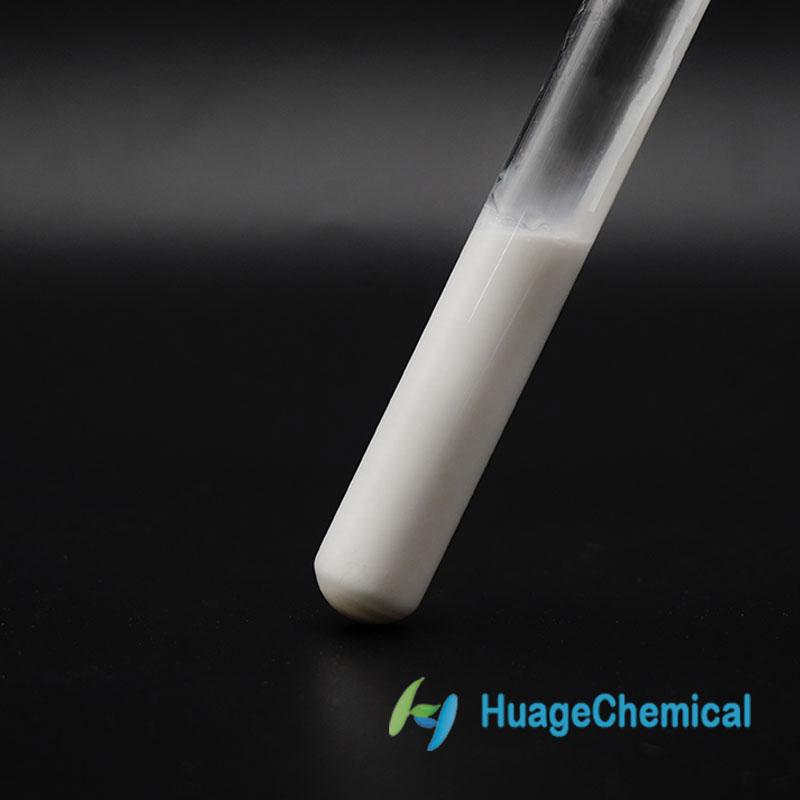
If you're sourcing a food packaging chemical and need help matching the right release agent, curing agent, or additive to your specific compliance requirements, feel free to contact us for a current quote and sample discussion.