
Particleboard Demoulding Agent Cost per Press Shift
Particleboard Demoulding Agent Cost per Press Shift Depends on Actual Use
Definition and purchasing scope for panel press release products
What the product term means
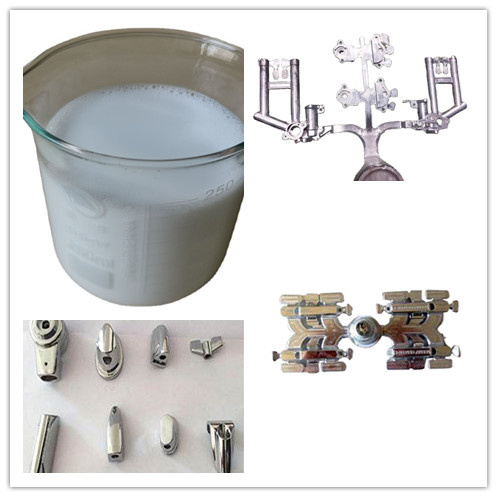
Particleboard Demoulding Agent is a release-agent product considered for wood-based panel production where a press, tooling surface, or contact surface needs controlled release during processing. For a purchasing team, the name alone is not enough to compare offers. A drum price does not explain how much concentrate is needed after dilution, how much prepared fluid reaches the press surface, how often operators clean equipment, or what production time is lost during cleaning. The buying decision should therefore start with the exact process point that needs treatment: press-contact surfaces, edge areas, transfer equipment, or another specified location. This product category should not be evaluated as a general maintenance chemical without confirming its intended particleboard process use, the relevant substrate contact, and the plant’s own operating conditions.
Types buyers should distinguish before comparing quotations
Buyers should separate release-agent quotations by use method and commercial format rather than assuming every product performs in the same way. A concentrate may be diluted before application, while a ready-to-use material may be supplied for direct use. Some plants apply product through a spray system, while others use manual wiping, roller transfer, or another controlled application method. Sholee Chemicals states that it accepts customized industrial release-agent, painting, and chemical-additive products, so an RFQ can define the application method and operating need rather than forcing a plant to compare only standard drum offers. This option fits plants that have a clear process requirement but need the supplier to assess whether customization is appropriate. It does not remove the need to agree the formula scope, application conditions, acceptance criteria, and commercial terms before ordering.
Features and application boundaries that affect line cost
Features worth asking a supplier to document
A useful quotation should identify whether the quoted product is concentrate or ready for use, the proposed dilution basis if applicable, the intended application method, and the information required for safe handling and storage. These details matter because they determine whether a buyer can convert a quoted purchase-unit price into cost per prepared litre and then into cost per press shift. The conclusion is simple: do not approve a release product from drum price alone. That approach fits only when two offers have the same supply format, the same dilution requirement, the same spray conditions, and the same cleaning effect. It does not apply when products use different preparation methods or when the plant does not yet know its current consumption. In that situation, request a controlled comparison based on actual usage records, not assumed coverage.
Where the product may fit and where it should not be assumed to fit
The stated application scope for Sholee Chemicals includes wood-based panels, which makes panel-processing requirements relevant to an initial supplier discussion. However, a wood-based-panel application statement is not proof that a particular product is suitable for every board formulation, press design, surface condition, or operating temperature. Buyers should provide the press area to be treated, application equipment details, production schedule, board type, and any current release or cleaning problem. This is especially necessary if the purchasing team is replacing a product that appears inexpensive but creates cleaning interruptions. Sholee Chemicals also supplies chemical additives and other industrial product categories. For separate procurement needs, buyers can review its curing agent products, but a curing agent should not be treated as a substitute for a press release product without process confirmation.
A cost model calculating chemical spend per press shift from dilution ratio spray rate line speed coverage area and cleaning-related downtime
Inputs to collect from the production and purchasing teams
The most reliable shift-cost comparison uses plant records from a normal operating shift rather than a supplier’s assumed consumption figure. Collect the concentrate purchase price, dilution ratio, spray rate, effective treated width, line speed, scheduled shift duration, and cleaning-related downtime. Also record the quantity and cost of any cleaning chemical used because cleaning can change total chemical cost even when release-agent consumption appears low. The conclusion is that both purchasing and production data are needed. Purchasing owns the quotation and delivered chemical price; production owns line speed, spray settings, and downtime records. This model fits late-stage supplier evaluation because it compares options on a common operating basis. It does not apply as a final cost forecast when the plant has no reliable spray, line, or downtime data; in that case, the result is only a planning estimate.
| Input | Symbol | How to obtain it | Why it matters |
|---|---|---|---|
| Concentrate price per unit | P | Supplier quotation including the agreed commercial basis | Sets the purchase cost of concentrate |
| Total prepared fluid per concentrate unit | R | Agreed dilution instruction expressed on one consistent basis | Converts concentrate cost into prepared-fluid cost |
| Spray rate | S | Measured prepared-fluid use per treated area | Shows application consumption |
| Line speed | V | Production record during normal operation | Determines treated area over time |
| Effective treated width | W | Measured width actually receiving product | Avoids using full machine width when treatment is partial |
| Productive time | T minus D | Scheduled shift time less cleaning downtime | Separates planned operation from lost production time |
| Cleaning cost | C | Cleaning chemical use plus the plant’s internal downtime value | Captures costs not visible in drum pricing |
Shift-level formula for a like-for-like comparison
Use consistent units throughout the calculation. Productive treated area equals line speed multiplied by effective treated width and productive time: A = V × W × (T − D). Prepared-fluid use equals spray rate multiplied by treated area: Q = S × A. If R represents the amount of prepared fluid made from each unit of concentrate, concentrate use equals Q ÷ R. Release chemical spend per shift is therefore P × Q ÷ R. To include cleaning, add the recorded cost of cleaning materials and the plant’s internally assigned value of cleaning-related downtime: total shift cost = release chemical spend + C. The conclusion is that a higher concentrate price can still produce a lower shift cost when it requires less concentrate after dilution, uses less prepared fluid, or reduces cleaning cost. This does not prove savings until every value is measured under comparable plant conditions.
| Comparison item | Quoted Option A | Quoted Option B | Buyer decision question |
|---|---|---|---|
| Concentrate price | Enter quoted value P-A | Enter quoted value P-B | Which price is being compared on the same purchase basis? |
| Dilution conversion | Enter R-A | Enter R-B | How much prepared fluid comes from each concentrate unit? |
| Measured spray rate | Enter S-A | Enter S-B | Does the application setting change prepared-fluid use? |
| Cleaning downtime | Enter D-A | Enter D-B | Does either option change cleaning frequency or duration? |
| Total shift cost | Calculate P-A × Q-A ÷ R-A + C-A | Calculate P-B × Q-B ÷ R-B + C-B | Which option has the lower verified operating cost? |
How downtime changes the decision beyond chemical consumption
Cleaning-related downtime needs careful treatment because it can reduce chemical use while increasing the operating burden. If the line stops for cleaning, less release fluid may be sprayed during that period, so concentrate consumption can look lower on a narrow chemical-spend report. Yet the plant has also lost productive treatment area and potentially lost board output. For this reason, keep two figures: release chemical spend per shift and total operating cost per shift including the plant’s own assigned downtime value. The first figure supports chemical purchasing control. The second supports management’s choice between quoted options. This approach fits plants where cleaning interruptions are a real line concern. It does not apply when downtime is unrelated to the release product, such as a separate mechanical stoppage; unrelated downtime should be recorded separately rather than assigned to the chemical quotation.

Price comparison rules that prevent a low drum price from misleading buyers
Use cost per prepared fluid and cost per shift before approving price
The correct price sequence is purchase-unit price, concentrate cost per prepared fluid, release chemical spend per shift, and total shift cost including cleaning. This sequence avoids a common purchasing error: choosing the lowest quoted drum solely because its invoice price is lower. A lower price fits the buyer’s objective only if the dilution basis, spray rate, and cleaning requirement remain comparable. If one product is supplied as a concentrate and another is ready to use, their purchase prices cannot be compared directly. If both are concentrates but their preparation instructions differ, the buyer must first calculate the amount of concentrate required for the same production shift. The same rule applies where spray settings differ. A price comparison remains incomplete until the plant identifies the quantity actually used during productive operating time.
Questions that should appear on every release-agent RFQ
- Supply format: Ask whether the quote is for concentrate or ready-to-use material, because this determines the calculation basis.
- Dilution basis: Ask for the intended preparation ratio in a clear format, because ambiguous ratio wording can produce incorrect purchasing calculations.
- Application point: State the press surface or process location being treated, because a general panel-use description is not an application instruction.
- Consumption record: Provide current spray rate, treated width, and line speed where available, because supplier price alone cannot establish shift cost.
- Cleaning record: State current cleaning frequency, cleaning materials, and downtime, because these costs may outweigh a lower drum price.
- Acceptance basis: Agree what plant observations will be used to assess the quoted option, because a purchasing decision needs a defined comparison method.
User guide for collecting usable press-shift data
Use a controlled record instead of estimates from memory
Start by selecting a normal production period that represents typical board output and normal operating conditions. Record the shift duration, time spent in cleaning activities connected to the treated surface, line speed during productive operation, and effective width receiving release fluid. Measure or document the prepared-fluid quantity added to the spray system and the concentrate quantity used to prepare it. Then record cleaning materials used and ask the plant manager or finance team for the internal method used to value lost production time. The conclusion is that the data sheet must follow the product from preparation through application and cleaning. This method fits a buyer comparing current supply with a possible replacement. It does not fit a line that is changing several process variables at once, because changes in board formulation, equipment condition, or operating procedures can make the comparison unreliable.
Common mistakes that distort chemical cost calculations
- Mixing concentrate and prepared-fluid prices: Compare both offers on the same basis before deciding which is cheaper.
- Using scheduled time as productive time: Deduct cleaning-related downtime when calculating treated area and report downtime separately.
- Assuming full press width is treated: Use the effective width actually receiving release fluid.
- Ignoring cleaning chemicals: Include their purchase cost if they are part of the operating consequence of the release option.
- Using a single unusual shift: Review records from representative production conditions before making a sourcing decision.
- Changing spray settings without recording them: A change in application setting can alter consumption and make product comparisons invalid.
Supplier fit and cooperation terms for industrial release-agent sourcing
What Sholee Chemicals can be considered for
Sholee Chemicals supplies release agents, chemical additives, color paste, and paint curing-agent products, with stated application areas that include wood-based panels. For a buyer assessing a panel press product, the relevant fit is its release-agent offering and its stated acceptance of customized industrial release-agent, painting, and chemical-additive products. This is useful when a plant needs to define an application requirement rather than simply purchase the lowest-priced standard drum. The company brief also states no MOQ, which can suit buyers who need to discuss a requirement without a stated minimum-order barrier. That term should not be interpreted as a promise of a particular product availability, freight arrangement, or commercial outcome. Those details still require confirmation in the RFQ and quotation.
Terms to clarify before placing an order
The company brief records a 30-day term, but it does not specify whether that term refers to production, delivery, validity, or another part of cooperation. Buyers should therefore ask Sholee Chemicals to define what the stated 30 days covers for the requested product and destination before treating it as a scheduling commitment. The same disciplined approach applies to product fit: provide the use point, dilution expectation, application equipment, operating records, packaging preference, and acceptance method. For procurement teams managing several industrial categories, Sholee Chemicals also lists PU paste and pigment and shoe sole paint products. These categories are separate from a wood-panel release-agent evaluation and should be quoted against their own process needs.
FAQ of panel press release-agent cost comparisons
Is the lowest quoted drum price normally the lowest operating cost?
No. The lowest purchase-unit price is only the lowest invoice figure until the buyer converts it into concentrate use per shift and adds cleaning-related cost. A lower-priced concentrate may require more concentrate after dilution, a higher spray rate, or more cleaning activity. Conversely, a higher quoted purchase price may produce a lower total shift cost if measured use and cleaning burden are lower. The conclusion is to compare total shift cost, not only drum price. This method is most useful where the plant has real records for preparation, spraying, line speed, and cleaning. It is not suitable for making guaranteed savings claims before a plant comparison has been completed under conditions that are reasonably alike.
What information should be sent when requesting a quotation?
Send the intended wood-panel application, the press or surface point requiring treatment, the current product format, available dilution information, application method, effective treated width, normal line speed, and any cleaning issue that affects production time. Also state whether the request concerns a standard product or a customized industrial release-agent requirement. This information helps the supplier understand the scope and helps the buyer receive a quote that can be entered into a shift-cost model. Sholee Chemicals can be considered as a release-agent and chemical-additive supplier for stated wood-based-panel applications, with no MOQ listed in its company brief and customization accepted for industrial release-agent products. If you are looking for a Particleboard Demoulding Agent supplier, contact Sholee Chemicals for a current quotation and selection discussion.