Footwear Chemical Additives: UV Resistance vs Flex Guide
Footwear Chemical Additives Balance UV Resistance And Flex Durability For Outdoor Shoes
Footwear chemical additives are the raw material components — resins, stabilizers, plasticizers, and curing agents — blended into sole compounds, coatings, or adhesives to control how a shoe part performs once it leaves the mold. For outdoor and high-flex footwear, two performance targets sit in constant tension: how well the material resists sun and weather exposure, and how well it keeps bending without cracking. Getting this balance wrong shows up months later, either as chalky, faded uppers or as sole cracks along the flex point. This guide breaks down the types, features, application areas, and cost drivers so developers can specify additive packages with fewer surprises.
What Footwear Chemical Additives Actually Do
In plain terms, these additives are functional chemicals added in small percentages — often 0.5% to 3% of total formulation weight — to modify how a base polymer behaves. A raw PU or rubber compound on its own is rarely stable enough for outdoor use; it needs UV absorbers to slow yellowing, hindered amine light stabilizers (HALS) to protect against photo-oxidation, plasticizers to keep flexibility at low temperatures, and curing agents to set the final hardness and bond strength. Footwear chemical additives are therefore not a single product but a formulation strategy, and the right combination depends heavily on the intended use case — a hiking boot sole faces different stresses than a fashion sneaker upper.
Types of Footwear Chemical Additives
Additive packages generally fall into functional categories rather than a single "one size fits all" product. Understanding these categories helps developers ask suppliers the right questions before a trial batch is even mixed.
- UV stabilizers and absorbers — protect against sunlight-driven color change and surface chalking, commonly used in outdoor soles and light-colored uppers.
- Flexing agents / plasticizers — maintain elasticity and reduce cracking under repeated bending, critical for PU soles and PU car carpet materials that see constant flex cycles.
- Release agents — applied to molds to allow clean part separation without surface defects; see our release agent range for mold-specific formulations.
- Color paste and pigments — deliver consistent tone across batches; our pu paste & pigment line is formulated to resist migration during curing.
- Curing agents — control cross-link density and final hardness, directly affecting both flex fatigue life and chemical resistance.
Features That Matter When Specifying Additives
Not every additive package delivers the same measurable benefit, so specification sheets need to be read closely rather than taken at face value. Key features to check include light stability rating (how many hours of accelerated UV exposure before visible yellowing), flex-to-failure cycle count (how many bend cycles before cracking under lab testing), compatibility with the base resin system, and processing temperature range. A package that scores well on UV protection but was never tested for flex fatigue is a common gap — ask for both data sets, not just one.
UV Resistance vs Flex Durability: The Core Tradeoff
This is the question most footwear developers eventually run into: can one additive package deliver both strong UV resistance and long-term flex durability? The honest answer is — partially, and only with careful dosing. Here's why, laid out as direct answers.
Does adding more UV stabilizer reduce flexibility?
Yes, in many formulations. Higher loadings of certain UV absorbers and HALS packages increase cross-link rigidity in the cured material, which raises hardness but can lower elongation-at-break. For a rigid outsole edge this is rarely noticeable; for a flex-zone area near the toe box, over-dosing UV stabilizer is a common cause of premature cracking.
Can flex-boosting plasticizers cause discoloration?
Some can. Certain plasticizer chemistries migrate toward the surface over time (a process called "blooming"), which interacts with UV exposure and accelerates yellowing or a hazy film on light-colored soles. This is more pronounced in white or pastel outsoles left in direct sun for long periods.
Comparison Table: Additive Priority by Use Case
| Shoe Component | Priority | Recommended Additive Focus | Tradeoff Risk |
|---|---|---|---|
| Outdoor hiking outsole | Flex durability | Moderate UV stabilizer + flex plasticizer | Some fading over 12+ months of direct sun |
| White fashion sneaker sole | UV / color stability | Higher UV absorber, low-migration plasticizer | Slightly reduced elongation, needs flex testing |
| PU car carpet backing | Flex durability | Flex-focused package, minimal UV additive | Not exposed to sun, so UV loading can be reduced |
| Metal die casting release coating | Release performance | Release agent, not flex/UV package | Not applicable — different additive class |
The practical takeaway: don't default to the maximum UV package "just to be safe." Match the additive loading to actual sun exposure and actual flex cycle demand. Over-specifying one property at the expense of the other is the single most common formulation mistake we see raised in developer inquiries.
Footwear Chemical Additives Application Areas
These additive systems are used well beyond shoe soles. Common application areas include PU soles (the largest volume use), PU car carpets where flex fatigue resistance matters more than UV exposure, wood-based panels needing surface stabilization, food-contact paper requiring low-migration additives, metal die casting where release performance is the priority rather than UV or flex, and general paint or glue systems needing a reliable curing agent to control set time and final hardness. Each application has its own dosing logic, and a package designed for PU soles should not be assumed to work identically in a die casting release scenario.
Footwear Chemical Additives Price And What Drives It
Pricing varies by additive type, purity grade, and order volume, but several factors consistently move cost up or down:
- Raw material grade — higher-purity UV stabilizers and HALS compounds cost more per kilogram but require lower dosing.
- Customization — a stock release agent formula is cheaper than a custom blend tuned to a specific mold geometry or resin system.
- Order volume — since we work with no minimum order quantity, small-batch trial orders are priced differently from bulk production runs, but per-unit cost typically improves at higher volumes.
- Testing requirements — if a buyer needs documented flex-cycle or UV-exposure test data, this adds to lead time and cost.
As a rough guide, expect specialty UV/flex combination packages to sit at a premium over single-function additives, since they require more formulation testing to balance both properties without one canceling out the other.
Selection And Use Guide For Developers
Before finalizing a formulation, work through this checklist:
- Define the sun exposure level of the finished part — indoor lining versus outdoor outsole changes UV needs completely.
- Estimate expected flex cycles — a running shoe flexes far more per day than a dress shoe.
- Request both UV exposure test data and flex-to-failure data from the supplier, not just one.
- Run a small trial batch first — since no MOQ is required, this is a low-risk way to validate performance before committing to bulk production.
- Check color stability separately if the part is light-colored, since blooming and yellowing interact with plasticizer choice.
- Confirm processing compatibility with existing mold and curing equipment before scaling up.
Common mistakes to avoid: assuming a "premium" additive automatically covers both UV and flex needs, skipping trial batches to save time, and not asking suppliers whether their release agent formula, color paste, and curing agent are compatible with each other in the same production line.
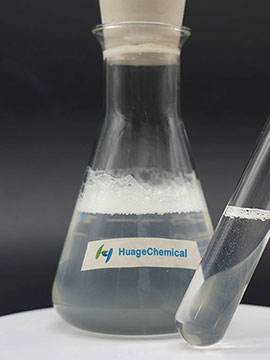
Sholee Chemicals As A Footwear Chemical Additives Supplier
Sholee Chemicals supplies release agents, chemical additives, color paste, and paint curing agents for footwear, PU car carpet, wood-based panel, food-contact paper, and metal die casting applications. We accept customized formulation requests for industrial release agents and painting/chemical additive products, and we work without a minimum order quantity, which allows developers to test small batches before scaling production. Typical order turnaround is 30 days. If you're comparing UV stabilization against flex durability for a specific sole or coating project, our technical team can review your target specifications and suggest a starting formulation direction.

FAQ Of Footwear Chemical Additives
Can one additive package handle both outdoor UV exposure and daily flexing?
Partially. A well-balanced package can cover moderate levels of both, but at extremes — very high UV exposure plus very high flex cycles — some compromise in one property is normal and should be tested for, not assumed away.
How do I know if my sole formulation is over-dosed on UV stabilizer?
Watch for reduced elongation-at-break in flex testing, or visible surface stiffness compared to a control sample without the additive. This is the clearest lab sign of over-dosing.
Do food-contact paper or die casting applications need the same UV/flex balance?
No. Food-contact paper additives prioritize low migration and safety compliance, while die casting relies on release performance rather than UV or flex properties. Each application uses a different additive logic.
Is a small trial batch enough to validate a new additive formula?
It's a reasonable first step, especially with no MOQ requirement, but final validation should include both accelerated UV exposure testing and repeated flex-cycle testing before committing to full production.
If you're sourcing footwear chemical additives and want to compare UV resistance against flex durability for your specific sole or coating project, feel free to contact us for the latest product quotation.